

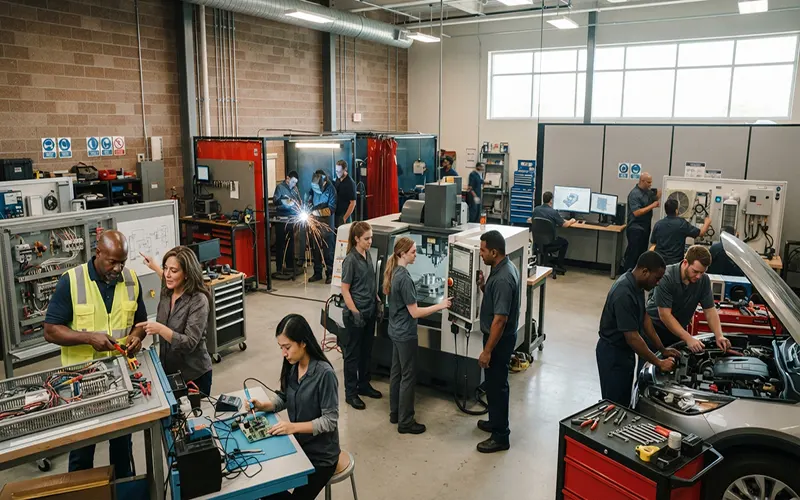
The modern labor market has undergone a dramatic transformation, characterized by an acute shortage of skilled tradespeople and technical professionals. While traditional four-year liberal arts degrees have long been pushed as the default path to success, countless graduates face steep student debt coupled with uncertain job prospects. Conversely, the demand for hands-on, highly specialized technical expertise has skyrocketed.
For working adults, career switchers, and non-traditional students looking to re-enter the workforce or pivot into high-paying industries, accredited vocational and technical education (CTE) programs offer an exceptionally high-return, fast-track alternative.
Why Accreditation Matters in Vocational Education
When investing your time, energy, and money into a technical training program, ensuring institutional or programmatic accreditation is non-negotiable.
- Quality Assurance and Standards: Accrediting bodies—such as the Accrediting Commission of Career Schools and Colleges (ACCSC) or the Commission on Accreditation of Allied Health Education Programs (CAAHEP)—rigorously evaluate trade schools to ensure their curriculum, faculty qualifications, and equipment meet industry standards.
- Access to Financial Aid: Attending an accredited vocational institution qualifies students to apply for federal student aid, Pell Grants, and specialized state workforce development funds.
- Licensing and Employment Compliance: Many regulated trades and healthcare fields require graduation from an accredited program to sit for state licensing exams or secure employment with reputable enterprise employers.
Top High-Demand Vocational and Technical Fields
Modern vocational education extends far beyond traditional mechanics and carpentry. Today’s technical programs train adults for cutting-edge, resilient industries driving the global economy:
1. Advanced Manufacturing and Mechatronics
- The Focus: Industrial automation, robotics, programmable logic controllers (PLCs), and computer numerical control (CNC) machining.
- The Career Impact: Modern factories are highly digitized. Adults trained in mechatronics step into high-paying maintenance and engineering technician roles that keep automated supply chains moving.
2. Healthcare Technology and Allied Health
- The Focus: Diagnostic medical sonography, surgical technology, radiological science, and biomedical equipment repair.
- The Career Impact: Clinical support and medical imaging are among the fastest-growing sectors in healthcare, allowing adults to enter medical environments without spending a decade in medical school.
3. Information Technology and Network Administration
- The Focus: Systems support, cloud infrastructure configuration, hardware repair, and foundational cybersecurity maintenance.
- The Career Impact: Technical institutes offer accelerated, hands-on IT bootcamps and diploma tracks that prepare students for vital CompTIA, Cisco, and Microsoft certifications.
4. Renewable Energy and Green Construction
- The Focus: Solar photovoltaic (PV) system installation, electric vehicle (EV) charging infrastructure deployment, and high-efficiency building systems.
- The Career Impact: Driven by massive federal and corporate investments in sustainability and decarbonization, green trades offer unmatched long-term job security.
How to Choose and Fund Your Technical Program
Evaluating a trade school requires looking beyond flashy marketing materials to examine hard institutional metrics:
- Check Placement and Graduation Rates: Request official data on job placement rates and graduate licensing exam pass rates before enrolling. A reputable school is transparent about its employment outcomes.
- Tour the Facilities: Technical education requires hands-on practice with real-world tools. Ensure the labs feature modern, up-to-date equipment rather than obsolete machinery.
- Maximize Funding Options: Look into state workforce development grants, Trade Adjustment Assistance (TAA) programs, or employer-sponsored tuition programs that frequently cover technical certificate costs.
Empowering Call to Action
Choosing a vocational or technical path is a pragmatic, empowering decision that prioritizes practical skill mastery and direct economic mobility. Whether you want to build the future of green energy, maintain automated industrial systems, or support critical healthcare operations, accredited trade programs provide a direct, reliable bridge to success.