
Bridging the Gap: Diabetes Self-Management Education for Low-Literacy Patients

Bridging the Gap: Diabetes Self-Management Education for Low-Literacy Patients

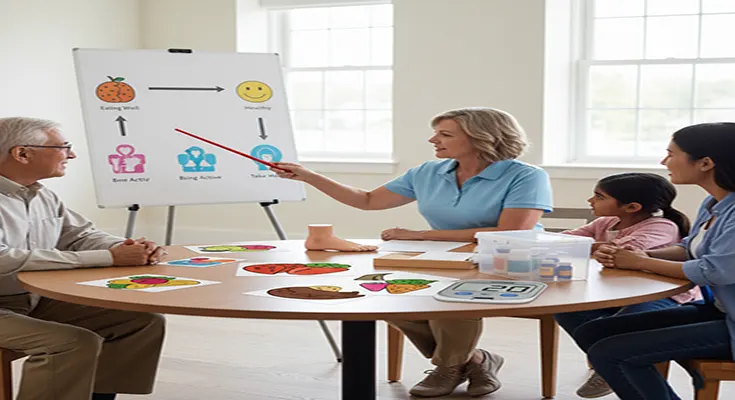
Diabetes self-management is a complex, demanding task, requiring patients to understand medication schedules, dietary restrictions, and blood glucose monitoring. However, standard educational materials often rely on reading levels far exceeding the national average. For the millions of adults with low health literacy, these materials become a barrier, not a bridge, leading to poorer adherence and health outcomes. Therefore, developing highly effective diabetes self-management education materials for low literacy patients is not just beneficial—it is an ethical imperative.

The Imperative for Visual and Simple Communication

Low literacy affects a patient’s ability to understand written instructions, calculate dosages, and interpret charts. Traditional text-heavy pamphlets must be replaced with materials that prioritize visual communication and simplicity.

1. Focusing on “Need-to-Know” Information

Educational content must be streamlined, focusing only on the most critical, actionable information. Instead of explaining the pathophysiology of insulin resistance, materials should focus on the “Four Key Actions”:

  1. Take medication correctly.
Bridging the Gap: Diabetes Self-Management Education for Low-Literacy Patients Read More
From Intention to Action: Creating Measurable IEP Goals for Executive Functioning and Task Initiation

From Intention to Action: Creating Measurable IEP Goals for Executive Functioning and Task Initiation

For students with executive functioning challenges, the gap between knowing what to do and doing it—the difficulty with task initiation—can be a major obstacle to academic success. These skills, including planning, organization, and self-regulation, are critical for navigating the increasing demands of middle and high school. When developing an Individualized Education Program (IEP), it’s vital to move beyond general statements and create measurable IEP goals for executive functioning and task initiation that are clear, observable, and trackable.

The Challenge of Measuring Executive Skills

Executive functioning is an internal cognitive process, making it inherently difficult to measure. A goal like “The student will improve their task initiation skills” is too vague. Effective IEP goals must adhere to the SMART criteria: Specific, Measurable, Achievable, Relevant, and Time-bound. They must pinpoint a specific behavior and define the criteria for success.

Key Components of a Measurable Goal

To …

From Intention to Action: Creating Measurable IEP Goals for Executive Functioning and Task Initiation Read More
The Great Divide: Classical Education vs. Charlotte Mason Homeschooling

The Great Divide: Classical Education vs. Charlotte Mason Homeschooling

Choosing a homeschool philosophy can feel like navigating a maze of scholarly terms and passionate advocates. Two of the most respected and widely adopted methods are Classical Education and the Charlotte Mason (CM) Method. While both share roots in the pursuit of wisdom, virtue, and a broad, rich curriculum, their foundational approaches—particularly regarding how a child learns—create distinct experiences. Understanding these differences is key for parents seeking the best fit for their family.

Focus of the Curriculum: Tools vs. Ideas

The primary point of divergence lies in their method of knowledge acquisition, especially in the younger years:

  • Classical Education (The Trivium): The modern Classical method is famous for its Trivium, dividing learning into three stages based on developmental readiness: Grammar (K-4, memorization of facts), Logic (5-8, critical reasoning), and Rhetoric (9-12, articulate expression). The focus in the Grammar stage is on providing a vast storehouse of facts—the
The Great Divide: Classical Education vs. Charlotte Mason Homeschooling Read More
Interactive Mental Health Awareness for High School Students: Cultivating Resilience and Support

Interactive Mental Health Awareness for High School Students: Cultivating Resilience and Support

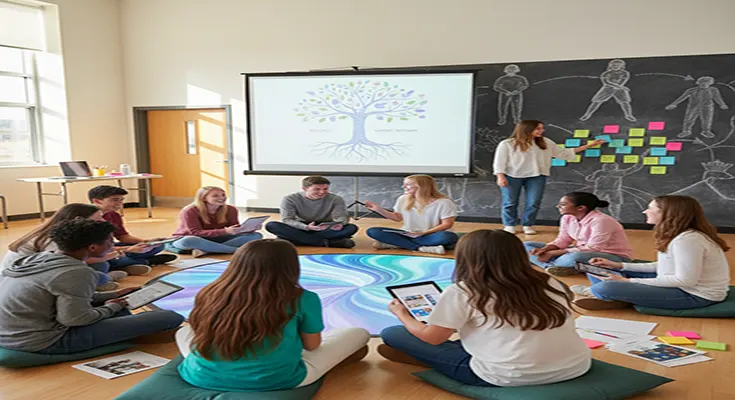
High school is a pivotal time, marked by rapid change, academic pressure, and complex social dynamics. For many students, this period also brings significant mental health challenges. Addressing these issues with traditional, passive lectures often falls short. The most effective approach is to implement interactive mental health awareness lesson plans that engage students directly, destigmatize the conversation, and equip them with practical coping skills. The goal is not just to inform, but to empower. A successful high school lesson plan must move beyond defining terms and dive into relatable scenarios and actionable strategies.

Three Pillars of an Effective Interactive Lesson

A truly impactful mental health curriculum must prioritize three core components:

1. Destigmatization Through Shared Experience

Interactive lessons create a safe, judgment-free space for dialogue. Instead of a teacher merely listing statistics, students engage in activities like “Myth vs. Fact” quizzes or utilize anonymous Q&A boxes where they can …

Interactive Mental Health Awareness for High School Students: Cultivating Resilience and Support Read More