In a special education classroom, where students often arrive with complex needs and backgrounds that may include trauma, creating an environment of safety and regulation is paramount. A calming corner is not merely a timeout space; it’s a strategically designed sanctuary that serves as a vital tool within a trauma-informed approach. It empowers students to self-regulate, process overwhelming emotions, and return to learning feeling secure and in control. Effective calming corners are thoughtfully stocked and consistently integrated into the classroom routine, making them a cornerstone of emotional support.
Why a Calming Corner in a Trauma-Informed Classroom?
Students who have experienced trauma often live in a state of hyperarousal or dysregulation, making it difficult to focus, engage, or learn. A calming corner provides:
- Predictability and Control: A safe, consistent space where students know they can go to regain control.
- Sensory Input Regulation: Tools to either calm an overstimulated nervous system or gently activate an under-stimulated one.
- Skill Building: A practical setting for students to practice coping strategies learned during direct instruction.
Essential Elements of a Trauma-Informed Calming Corner
The goal is to create a multi-sensory environment that supports diverse regulatory needs.
1. Comfort and Boundaries
The physical setup is crucial.
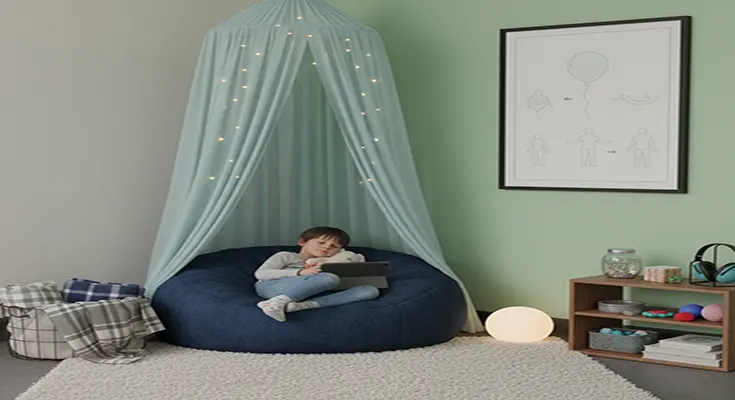
- Soft Seating: Beanbags, floor cushions, or a small, cozy armchair.
- Privacy: A canopy, a pop-up tent, or a strategically placed bookshelf can provide a sense of enclosure and safety without isolation.
- Warm Lighting: Ditch harsh fluorescents. Opt for string lights, a lava lamp, or a small, dimmable lamp.
- Soft Textures: Include weighted blankets, fidget blankets, or soft stuffed animals for tactile input.
2. Sensory Regulation Tools
Stock the corner with items that engage the senses in a calming way.
- Visual: Glitter jars, liquid motion timers, pinwheels, or calming nature pictures.
- Auditory: Noise-canceling headphones, a small white noise machine, or a playlist of calming instrumental music.
- Tactile: Stress balls, fidget spinners, sensory bins (e.g., rice, beans, water beads), play-doh, or kinetic sand.
- Olfactory (Use with Caution): A small diffuser with a very mild, student-approved essential oil (e.g., lavender), or scented playdough. Always check for allergies and sensitivities.
3. Emotional Processing and Skill-Building Resources
This is where students learn and practice coping strategies.
- Feeling Charts: Visual aids with pictures of various emotions and corresponding coping strategies.
- Calming Strategy Cards: Laminated cards depicting different coping skills (e.g., “Take 5 Deep Breaths,” “Count to 10,” “Squeeze a Stress Ball”).
- Journal/Paper & Crayons: For students who express themselves through drawing or writing.
- Social Stories: Simple stories explaining the purpose of the calming corner and how to use its tools.
Implementation and Integration
A calming corner is only effective if it’s integrated seamlessly into the classroom culture.
- Direct Teaching: Explicitly teach students how and when to use the calming corner. Role-play scenarios.
- Visual Cues: Use a visual schedule or a designated “Calming Corner Pass” to signal when it’s appropriate to use the space.
- Debriefing: After a student uses the corner, check in with them. Ask, “What helped you feel calm?” or “What strategy did you use?” to reinforce skill development.
By investing in well-designed and consistently utilized calming corner ideas for trauma-informed special education classrooms, educators provide students with the invaluable gift of self-regulation, fostering resilience and creating an optimal environment for learning and growth.