

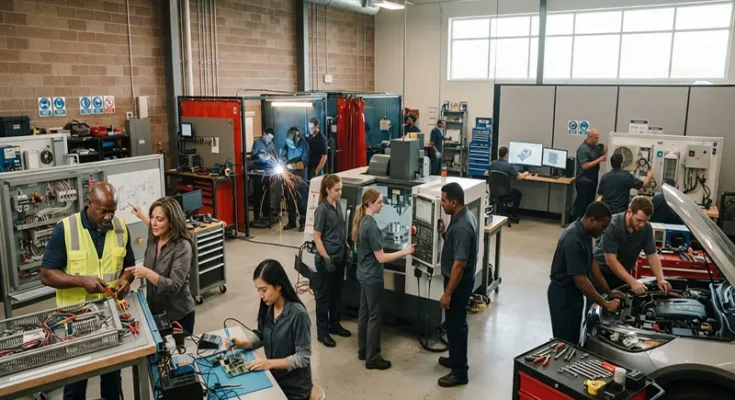
Accredited Vocational and Technical Adult Education Programs

Accredited Vocational and Technical Adult Education Programs

The modern labor market has undergone a dramatic transformation, characterized by an acute shortage of skilled tradespeople and technical professionals. While traditional four-year liberal arts degrees have long been pushed as the default path to success, countless graduates face steep student debt coupled with uncertain job prospects. Conversely, the demand for hands-on, highly specialized technical expertise has skyrocketed.

For working adults, career switchers, and non-traditional students looking to re-enter the workforce or pivot into high-paying industries, accredited vocational and technical education (CTE) programs offer an exceptionally high-return, fast-track alternative.

Why Accreditation Matters in Vocational Education

When investing your time, energy, and money into a technical training program, ensuring institutional or programmatic accreditation is non-negotiable.

  • Quality Assurance and Standards: Accrediting bodies—such as the Accrediting Commission of Career Schools and Colleges (ACCSC) or the Commission on Accreditation of Allied Health Education Programs (CAAHEP)—rigorously evaluate trade schools to ensure their curriculum, faculty qualifications,

… Accredited Vocational and Technical Adult Education Programs Read More
Modernizing Public School Funding Models to Achieve Equitable Education Reform

Modernizing Public School Funding Models to Achieve Equitable Education Reform

The foundational promise of public education is rooted in the belief that every child, regardless of zip code or socioeconomic background, deserves access to a world-class learning environment. Yet, for generations, legacy funding mechanisms have systematically undermined this ideal. Across the country, deep disparities in school resources continue to widen the achievement gap between affluent and marginalized communities.

Fixing these inequities requires more than minor budgetary tweaks or temporary grants. True educational reform demands a fundamental modernization of how public schools are financed, shifting the paradigm from geographic dependency to true equity-driven resource allocation.

The Flaws of Legacy Property-Tax-Based Funding

To understand why modern reform is so urgent, one must examine the structural flaw embedded in traditional American school finance: the reliance on local property taxes.

  • The Wealth Disparity Trap: When school districts rely primarily on local property taxes for funding, children born in wealthy suburban enclaves attend schools
… Modernizing Public School Funding Models to Achieve Equitable Education Reform Read More